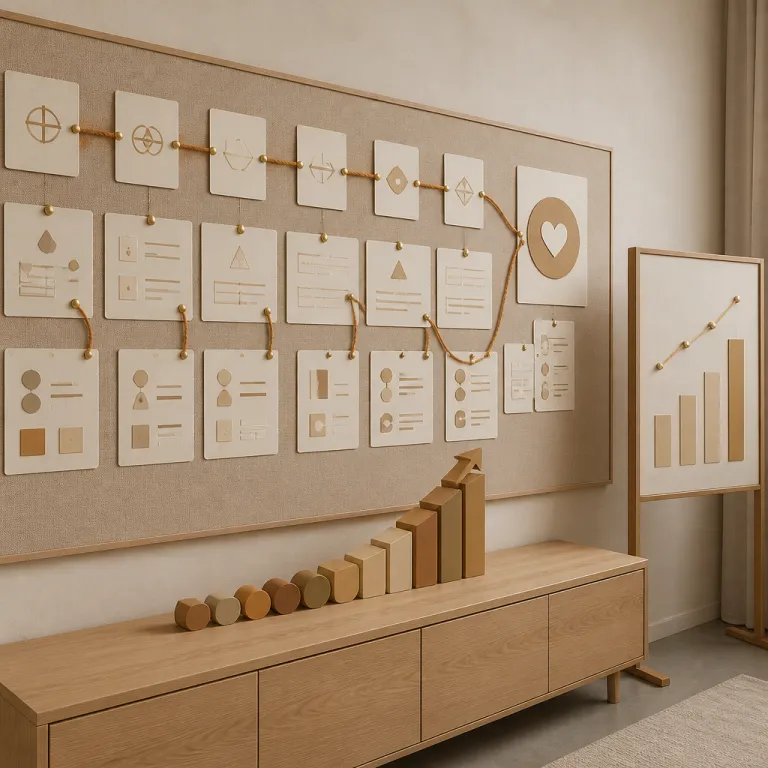
Why aligning every team around customer satisfaction starts with UX vision
Aligning all teams around customer satisfaction begins with a clear UX vision that everyone can repeat in their own words. When a company frames this vision around the question of how to align every department around customer satisfaction, every business decision gains a human-centered anchor instead of being driven only by internal targets. This shared direction helps managers focus on what truly improves the experience for customers instead of chasing isolated performance indicators or short-term efficiency gains.
In practice, a strong UX vision translates abstract satisfaction scores into concrete service principles and design standards. Product designers, support teams, and marketing specialists learn to read satisfaction data as a narrative about real people, not just dashboards and performance charts. This narrative allows each team to identify where the experience breaks, then focus efforts on redesigning journeys that strengthen customer trust and loyalty at specific touchpoints rather than making cosmetic changes.
UX leaders should articulate how customer satisfaction levels connect to business strategy and competitive advantage in language that resonates with finance, operations, and HR. When teams see that higher satisfaction levels correlate with better customer retention and customer loyalty, they become ready to move beyond vanity metrics and isolated UX experiments. The question of aligning all teams around customer satisfaction then shifts from theory to a daily design practice that guides team performance, supports employee engagement, and clarifies trade-offs when priorities conflict.
Using design thinking to connect satisfaction data with everyday decisions
Design thinking offers a practical framework to align teams around customer satisfaction in complex organisations by turning data into decisions. Instead of treating surveys and satisfaction data as static reports, UX designers use them as prompts for empathy, reframing quantitative scores into concrete design challenges that cross departmental boundaries. This mindset helps companies improve both the digital interface and the human service behind it, so that customer experience feels coherent from first contact to long-term support.
During research phases, teams run qualitative interviews alongside quantitative survey programmes to understand satisfaction levels in context and uncover root causes. They analyse frequently asked questions from support, map emotional highs and lows in the journey, and identify areas where customers feel lost or ignored despite acceptable performance metrics. These insights allow the company to provide better guidance, improve retention, and strengthen customer relationships through targeted UX improvements that are prioritised in roadmaps and service playbooks.
To avoid ritualistic workshops, design leaders should ground each ideation session in real satisfaction data and real customer stories that participants can quote later. A simple template is to start every workshop with three recent customer quotes, one key metric trend, and one short clip or transcript excerpt. When employees learn to link every prototype, content decision, or micro-interaction to a specific satisfaction indicator, aligning teams around customer satisfaction becomes a measurable, shared objective rather than a vague cultural aspiration.
From customer surveys to actionable UX metrics across teams
Most companies collect customer surveys, yet few translate them into actionable UX metrics for every team and role. The key is to transform each survey and each set of satisfaction data into clear indicators that different employees can influence directly in their daily work. When managers focus on these indicators, team performance aligns naturally with customer satisfaction and customer retention goals instead of being driven only by internal productivity measures.
For example, a digital product team might track task success rate, time on task, and post-task satisfaction levels for key journeys such as onboarding or checkout. Support teams could monitor resolution time, sentiment in frequently asked support tickets, and the satisfaction level after each interaction using short post-contact surveys. When these metrics are shared transparently, the company learns patterns faster and improves its ability to provide consistent service quality across channels and devices.
UX leaders should also connect these metrics to long-term outcomes such as customer loyalty and employee satisfaction, using evidence from recognised research. McKinsey’s 2019 customer-experience analysis reported that CX leaders achieve revenue growth 5 to 10 percent higher than their market, while Forrester’s Customer Experience Index has shown that a one-point CX score increase can translate into millions in additional annual revenue in sectors like retail banking and airlines. A practical dashboard schema might group indicators into three blocks: experience quality (task success, error rate), emotional response (post-interaction satisfaction, Net Promoter Score), and business impact (repeat purchase rate, churn). By reviewing these blocks together, organisations strengthen customer-centric habits and align business strategy with lived experience.
Aligning product, support, and operations around shared customer journeys
True alignment around customer satisfaction happens when product, support, and operations teams share the same journey maps and use them as a reference in planning. Instead of each business unit optimising its own performance in isolation, they co-design end-to-end experiences that make customers feel supported and satisfied at every step. This shared mapping directly addresses the challenge of coordinating all teams around customer expectations and reduces the risk of contradictory policies.
In a typical scenario, UX designers facilitate workshops where employees from different teams bring their own data, from support logs to operational KPIs and marketing analytics. Together they identify areas where handovers fail, where service promises are unclear, or where customers face repeated questions without clear answers or consistent information. These sessions help employees learn how their local decisions affect global satisfaction levels and customer loyalty, and they create a shared backlog of cross-functional improvements.
When journeys are shared, managers focus less on siloed team performance and more on collective outcomes such as customer retention and overall satisfaction level across the journey. Companies improve coordination by defining cross-functional rituals, like a weekly one-hour review with a fixed agenda: 15 minutes on key metrics, 30 minutes on one critical journey step, and 15 minutes on decisions and owners. Over time, this approach helps the company provide smoother service, improve retention, and strengthen customer trust across every touchpoint, even when teams change or new channels are added.
Designing internal tools so employees can learn from customers
UX and service design do not stop at customer-facing interfaces; they must also shape internal tools that employees rely on every day. When internal dashboards, CRM views, and knowledge bases are designed with the same care as public products, employees learn faster from customers and feel more engaged in solving their problems. This internal UX work is central to aligning large organisations around customer satisfaction because it determines how quickly insights travel.
Effective internal tools surface satisfaction data in ways that are understandable for non-specialists and easy to act on. For instance, a support agent should see recent surveys, satisfaction levels, and frequently asked issues directly in the ticket interface, along with suggestions to improve service quality based on similar resolved cases. When employees can quickly identify areas of friction, they are ready to move from reactive support to proactive guidance that strengthens customer relationships and reduces avoidable contacts.
Good internal UX also contributes to employee satisfaction, because it reduces cognitive load and repetitive work that often cause frustration. When a company provides clear interfaces, employees feel more capable of influencing customer satisfaction and customer loyalty and can see the impact of their actions in real time. Over time, this alignment between employee experience and customer experience becomes a durable competitive advantage and a practical way to keep every team focused on customer needs rather than internal complexity.
Embedding customer centric UX in culture, training, and design careers
Aligning every team around customer satisfaction requires more than tools; it demands cultural change and consistent reinforcement. Design leaders need to integrate the question of customer-centric alignment into onboarding, training, and career paths so that it becomes part of how performance is discussed. When both a junior student intern and a senior manager hear the same message, the culture gradually shifts from project-by-project UX to continuous customer experience improvement.
Training programmes should use real cases where satisfaction data changed a product roadmap or a service script and led to measurable outcomes. For example, a telecom company might show how a 15-point increase in post-call satisfaction led to a measurable drop in churn over two quarters, echoing findings from Gartner that more than 80 percent of companies expect to compete primarily on customer experience. Employees from different roles can share stories of how they improved a satisfaction level, increased customer retention, or turned a frustrated customer into a loyal advocate by changing a single step in the journey.
When companies improve their learning culture, the organisation learns faster from both satisfied and dissatisfied customers and treats complaints as design input. Managers focus on how each role contributes to customer loyalty, while teams use surveys and recurring questions as inputs for continuous UX improvement rather than one-off reports. Over time, this shared learning loop is what truly strengthens customer centricity and embeds customer satisfaction into everyday design practice, performance reviews, and promotion criteria.
Key statistics on customer satisfaction and UX alignment
- According to a 2019 report from McKinsey on customer experience leaders, companies that excel in CX achieve revenue growth rates 5 to 10 percent higher than their market and reduce costs by 15 to 25 percent, showing how customer satisfaction directly supports business performance.
- Research from Forrester’s Customer Experience Index has shown that improving a brand’s customer experience score by one point can lead to millions in additional annual revenue, depending on the sector, underlining the financial impact of higher satisfaction levels and better-designed journeys.
- A 2018 study by Gartner on customer experience strategy found that more than 80 percent of companies expected to compete primarily on customer experience within two years, confirming that UX and service design have become core drivers of competitive advantage and differentiation.
- Data from the XM Institute (formerly Temkin Group) has reported that companies with strong customer experience enjoy customer loyalty rates that are about five times higher than those with poor experiences, which directly affects customer retention, lifetime value, and advocacy.
FAQ about aligning teams around customer satisfaction in UX design
How can UX teams measure the impact of their work on customer satisfaction?
UX teams can link design changes to specific metrics such as task success rate, Net Promoter Score, and post-interaction satisfaction levels that are tracked over time. By running A/B tests and tracking survey responses before and after releases, they connect design decisions to measurable changes in satisfaction data and behaviour. Sharing these results with other teams helps align everyone around the same customer-centric goals and builds confidence in UX methods.
What role does customer support play in UX and service design?
Customer support is a critical source of qualitative insights for UX and service design because it captures unfiltered customer language. Support teams collect frequently asked questions, pain points, and emotional reactions that reveal where the experience fails or expectations are unclear. When designers collaborate closely with support, they can identify areas for improvement and co-create solutions that reduce friction, improve retention, and prevent recurring issues.
How can managers focus teams on customer satisfaction without adding pressure?
Managers should frame customer satisfaction as a shared learning objective rather than a punitive KPI that triggers blame. They can provide clear, achievable targets, celebrate small wins, and ensure that employees have the tools and autonomy to influence satisfaction levels in their own scope. This approach supports employee satisfaction while still strengthening customer loyalty and overall business performance, because people feel trusted rather than monitored.
Why is internal UX important for aligning teams around customer satisfaction?
Internal UX determines how easily employees can access and act on customer information when it matters. Well-designed dashboards, workflows, and knowledge bases help employees learn from satisfaction data and respond quickly to issues without switching between multiple systems. When internal tools support this learning, teams are better equipped to provide consistent service and maintain high satisfaction levels, even under pressure or during peak periods.
How should a student or junior designer approach customer satisfaction in their portfolio?
A student or junior designer should highlight projects where they used research, surveys, or interviews to understand customer needs and measure satisfaction in a structured way. They can explain how their design decisions affected satisfaction levels, customer retention, or loyalty indicators, even if the numbers are small or based on pilot tests. This focus shows potential employers that they understand both UX craft and its impact on business strategy, and that they can speak the language of product and service outcomes.