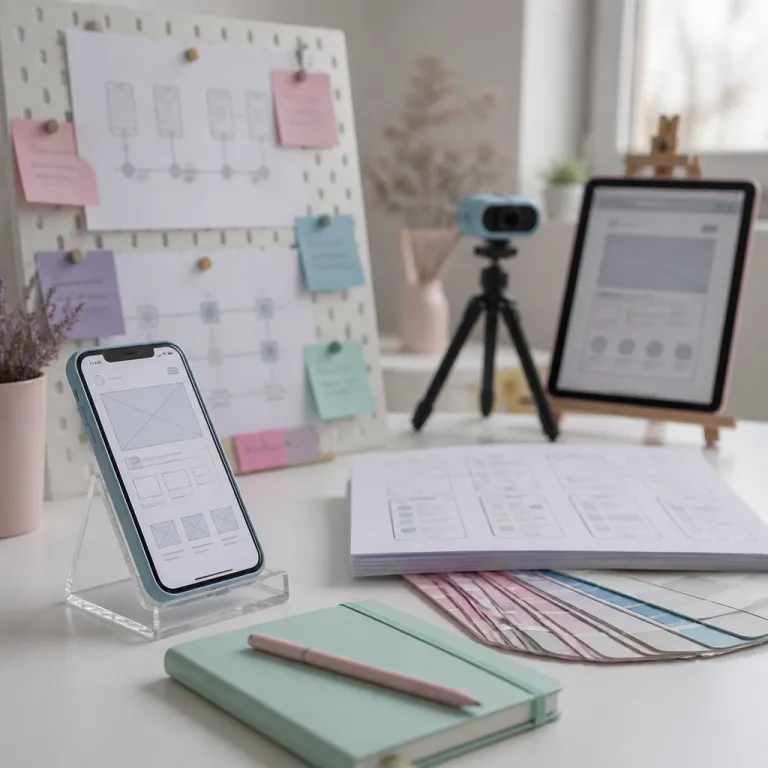
Why user experience now defines digital product development services
User experience has become the primary lens for evaluating any digital product. When a company invests in digital product development services, it is no longer buying only code, it is buying a complete design development approach that aligns every feature with a measurable user outcome. Strong UX work transforms abstract ideas into real products that users can understand, trust, and recommend.
For individuals seeking information about design, the most useful way to read the landscape is to look at how a development company structures its development process around user experience rather than technology alone. A mature services company will connect research, interface design, software development, and continuous feedback into one coherent product development loop that serves both users and businesses over the long term. This shift means that a digital product is judged not by how advanced the software appears, but by how clearly it solves a real user problem in a web application, mobile app, or cross platform ecosystem.
Digital product development services that take UX seriously always start from data about the user, not from internal assumptions. They treat each app, each set of features, and each family of digital products as part of a broader platform that must support mental health, cognitive load, and emotional comfort, not only task completion. When a development partner works this way, the same team can design products for sectors as different as real estate and mental health while keeping a consistent standard of clarity, accessibility, and trust.
From research to interface: structuring UX in the development process
A credible development company anchors every digital product in rigorous research before writing a single line of software. The UX design team conducts interviews, observes real user behaviour, and analyses quantitative data to understand how people actually work with existing products and services. This research phase shapes the product development roadmap, the prioritisation of features, and the architecture of the web application or mobile app.
In high performing digital product development services, research outputs are not static reports that nobody will read, they are living artefacts that guide design development sprints and software development decisions. User journeys, service blueprints, and information architecture maps become shared tools for the whole team, from UX designers to back end engineers and the founder CEO who must defend the investment. When a services company links these artefacts to a well designed customer data platform, such as the type described in this guide on designing an effective B2B customer data platform, it can personalise experiences while still respecting privacy and mental health boundaries.
During interface design, the development partner translates research into concrete screen layouts for each app and platform, whether for desktop web application products or mobile app services digital ecosystems. Every component of the software, from navigation to microcopy, is tested with real users and refined based on feedback about clarity, speed, and emotional tone. Over several iterations, the development services team aligns the visual design, interaction patterns, and content strategy so that the final digital products feel coherent, respectful, and easy to use across devices.
Designing for cognitive load, mental health, and ethical engagement
Thoughtful digital product development services recognise that every interaction affects the user’s cognitive load and mental health. A cluttered app with too many features can exhaust users, while a calm interface with clear hierarchy can help them focus on the work that matters. Ethical UX design development therefore treats attention as a scarce resource and designs products that respect human limits.
For a services company building digital products in sensitive domains such as mental health or real estate, the responsibility is even higher because the software mediates life changing decisions. The development process must include stress testing of flows, language, and notifications to ensure that the digital product does not create unnecessary anxiety or pressure. Teams that integrate eco responsible UX principles, such as those detailed in this article on eco conscious web design, often find that reducing visual noise and technical bloat improves both environmental impact and user experience.
Ethical engagement also means that a development company uses data transparently and gives users control over their information in every web application and mobile app. When businesses commission development services, they should require clear explanations of how data is collected, how long term retention works, and how feedback loops are handled inside the platform. A trustworthy development partner will design consent flows, dashboards, and support channels that help users read, manage, and correct their data without friction, which in turn strengthens loyalty to the products and services.
Translating UX strategy into concrete features for web and mobile
Once research and strategy are clear, digital product development services must translate them into concrete features that feel natural on each platform. A responsive web application might prioritise complex workflows and data visualisation, while a mobile app focuses on quick tasks, notifications, and location aware services. The same digital product can therefore present different interfaces while keeping a consistent core experience and design language.
Effective product development balances user needs, business goals, and technical constraints so that each feature delivers measurable value. For example, a development company working on a real estate platform might design products that allow users to filter properties by mental health related criteria such as noise levels, access to green spaces, or commute stress, using real data from sensors and city records. The development partner then integrates these features into both the web application and the mobile app, ensuring that the software development effort supports a seamless journey from initial search to final contract.
To keep this alignment over the long term, a services company should maintain a shared UX backlog that connects feedback from support channels, analytics dashboards, and qualitative interviews. This backlog helps the team decide which features to refine, which to remove, and which new services digital users actually need across the family of digital products. When teams also experiment with advanced interaction patterns, such as the scroll driven animations described in this article on CSS based scroll animations, they can enrich user experience without sacrificing performance or accessibility.
Case study mindset: learning from real products and long term partnerships
Teams that excel at digital product development services treat every launch as the beginning of a case study, not the end of the project. They document how the product performs in real conditions, how users behave in the app, and how businesses adapt their work processes around the new software. This case study mindset turns each engagement into a learning engine that improves future products and services.
When you read case analyses from a development company, pay attention to how clearly they connect user experience decisions to measurable outcomes. A strong development partner will explain how specific design development choices helped reduce support tickets, increase task completion rates, or improve mental health indicators such as perceived stress in a workplace platform. Over the long term, these documented results show whether the development services provider can sustain quality across multiple digital products, from a complex web application for B2B clients to a consumer mobile app for real estate search.
For individuals evaluating services digital providers, it is useful to ask for at least one detailed case study that covers the full development process from discovery to post launch optimisation. This document should include both successes and failures, with honest discussion of what the team learned and how feedback from users reshaped the product development roadmap. When a services company is willing to share such transparent narratives, it signals a culture of accountability that benefits every future digital product and every user who will rely on its features.
Choosing a UX focused development partner for your next digital product
Selecting the right development partner is one of the most consequential decisions for any digital product initiative. Beyond price and timelines, you should evaluate how the development company thinks about user experience, mental health impacts, and long term maintenance of the software. A partner that treats UX as a strategic asset will design products that remain relevant even as user expectations and devices evolve.
During evaluation, ask to meet the core design and engineering team that will work on your app, web application, or broader platform. Request concrete examples of how their digital product development services have helped businesses in your sector, whether in real estate, healthcare, or education, and ask to read at least one detailed case document. A credible services company will show how it integrates data driven research, iterative design development, and robust software development into a single development process that protects both user experience and business outcomes.
Finally, look for signs that the founder CEO and leadership team understand the value of UX beyond aesthetics and are committed to ethical, human centred products. Ask how they collect and act on user feedback, how they plan for accessibility, and how they support mental health friendly work rhythms inside their own team, because internal culture often shapes external products. When these elements align, you gain not only a vendor of development services but a strategic partner capable of guiding your digital products through multiple generations of change.
Key statistics on UX and digital product development services
- According to Forrester’s report “The Six Steps For Justifying Better UX” (Forrester Research, 2016), well designed user interfaces can increase conversion rates by up to 200 %, while more comprehensive UX improvements can lift conversion by up to 400 %, which directly affects the ROI of digital product development services.
- Research from the Baymard Institute’s “E-Commerce Checkout Usability” benchmark (Baymard Institute, 2024) shows that the average documented cart abandonment rate for e commerce websites is 69.99 %, and UX improvements in checkout flows are among the most effective ways to reduce this loss in digital products.
- A McKinsey report titled “The Business Value of Design” (McKinsey & Company, 2018) found that companies in the top quartile of the McKinsey Design Index outperformed industry benchmark growth by as much as two to one, indicating that strong design development practices correlate with superior financial performance for businesses investing in software development.
- The World Health Organization’s fact sheet “Mental health in the workplace” (WHO, 2019) estimates that depression and anxiety cost the global economy around US$ 1 trillion per year in lost productivity, which underscores why mental health aware UX in web application and mobile app design is not only ethical but economically relevant.
- Data from Google’s “The Need for Mobile Speed” research (Google / SOASTA, 2017) indicates that 53 % of mobile users abandon sites that take longer than three seconds to load, making performance optimisation a critical part of any development process focused on user experience.
FAQ about UX optimisation in digital product development services
How does UX research influence the features of a digital product ?
UX research reveals what users actually need, which features they understand, and where they struggle in existing products and services. Digital product development services use this data to prioritise the most valuable features and remove unnecessary complexity from the app or web application. As a result, the final software aligns more closely with real user behaviour and delivers better outcomes for both users and businesses.
Why should a development company consider mental health in UX design ?
Mental health considerations help teams design products that reduce stress, avoid dark patterns, and support healthy usage patterns. When a development partner pays attention to cognitive load, notification frequency, and language tone, the resulting digital products feel calmer and more respectful. This approach improves user satisfaction, long term engagement, and brand trust for the services company behind the platform.
What is the role of feedback after launching a web application or mobile app ?
Post launch feedback is essential because it shows how the digital product performs in real conditions beyond controlled tests. A UX focused development process treats feedback from analytics, support tickets, and interviews as input for continuous product development and software development cycles. Over time, this loop helps refine features, fix usability issues, and adapt the platform to new user needs.
How can I evaluate whether a development partner is truly UX driven ?
You can ask to read case studies that detail how UX decisions affected measurable results, such as conversion rates or task completion times. A genuinely UX driven development company will show how its digital product development services integrate research, prototyping, and testing into every phase of the development process. It will also involve you in key design decisions and explain trade offs in clear, non technical language.
Is it better to build separate products for web and mobile, or one unified platform ?
The choice depends on your users, your business model, and the complexity of your services. Many businesses benefit from a unified platform strategy where the same core digital product powers both a web application and a mobile app, with interfaces adapted to each context. A skilled services company can design products that share data and logic while still offering tailored user experience patterns on each device.