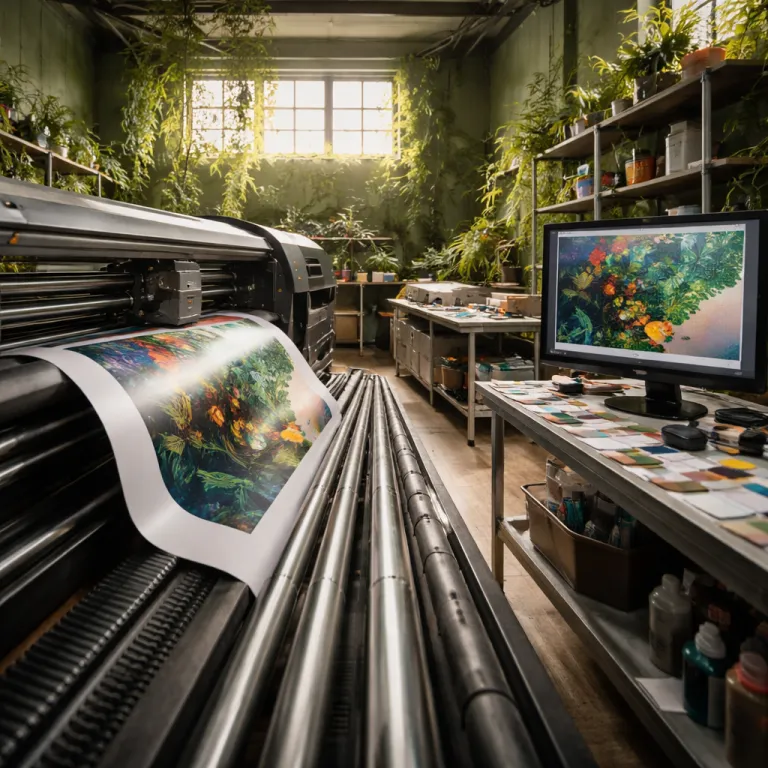
Digital Graphic Design Evolution: From Printing Press Posters to Pixels
From printing press posters to pixels on every screen
The story of digital graphic design evolution starts long before the first screen lit up. When we look at the work of Cassandre or Josef Müller-Brockmann, we see a graphic discipline obsessed with structure, rhythm and the technical constraints of the printing press. That legacy still shapes how a contemporary graphic designer composes a web hero image, a motion title sequence or a responsive campaign visual across today’s digital platforms.
For many designers, the grid systems of Swiss graphic schools remain a silent framework behind even the most experimental interface. This is where traditional graphic culture meets Figma components, as a creative director translates classic print rules into flexible layouts that must work from 320-pixel phones to 5K displays. The continuity is not nostalgic; it is a practical way to keep visual clarity and brand consistency while tools, software and formats change every couple of years.
On World Graphic Design Day, the tension between past and present becomes especially visible. Agencies bring conversation pieces from their archives, and people compare historical posters with current digital campaigns on large screens and social feeds. You can almost trace a line from the ink of the printing press to the RGB gradients of a landing page, and that line is the real backbone of contemporary digital graphic culture and interface design.

What pioneers still teach digital teams
Cassandre reminds every designer that one strong visual idea can carry an entire campaign. Müller-Brockmann shows graphic designers how a strict grid can free creative energy instead of killing it, especially when they need to create complex web dashboards or data-dense layouts. David Carson proves that breaking rules in graphic design only works when you have mastered them first, which is a lesson many young digital designers forget when they jump straight into generative tools.
For a senior graphic designer or creative director, these references are not museum pieces. They are a shared language that helps align a team around client design decisions, especially when a client wants everything bigger, louder and more animated. In that sense, the heritage of traditional graphic practice is still a daily tool for negotiating with clients, protecting the integrity of the work and explaining why certain visual choices support long-term brand recognition and user trust.
Néo brutalisme and the backlash against algorithmic smoothness
The current wave of néo brutalisme in digital interfaces is not a passing aesthetic fad. It is a reaction to the hyper-polished, AI-generated templates that have flooded web and app design over the last few years. Designers are using massive type, raw grids and harsh contrasts to signal that a human hand still controls the visual narrative and that the interface has a point of view.
On many web projects, you now see layouts that feel closer to photocopied fanzines than to glossy brand guidelines. This is digital graphic design evolution in real time, where designers intentionally expose technical aspects like pixelation, misaligned elements or visible system fonts. The goal is not to sabotage usability; it is to bring conversation back to authenticity and to remind clients that friction can be a creative tool when used with care.
Color choices follow the same logic, with Pantone Cloud Dancer often used as a quiet background against brutalist blacks and saturated neons. That soft off-white becomes a breathing space in the chromatic chaos of seasonal campaigns, especially around spring events like World Graphic Design Day. It allows people to rest their eyes while still feeling the energy of bold graphic interventions on top.
How to apply néo brutalisme without sacrificing clarity
For a working designer, the challenge is to integrate néo brutalisme into client design projects without breaking accessibility. You can push type sizes, contrast and raw layouts, but you still need to respect basic technical aspects like readable line length, sufficient spacing and minimum contrast ratios. As a reference, the Web Content Accessibility Guidelines (WCAG 2.1) recommend a contrast ratio of at least 4.5:1 for normal text and 3:1 for large text, which still leaves room for expressive brutalist palettes.
In practice, many creative directors run A/B tests where one variant uses a more brutalist graphic language and another stays closer to established brand systems. Public case studies from European agencies such as Studio Dumbar/DEPT® describe how bold, type-driven landing pages for cultural clients can increase average time on page compared with more conventional layouts, as long as the core information hierarchy remains clear. Over time, this kind of data gives designers evidence to bring conversation about risk taking into meetings with cautious clients who fear anything that looks less than perfectly polished.
Hybrid images, 3D and motion as the new graphic baseline
Hybrid imagery has quietly become the default language of digital graphic design. A single campaign visual now mixes photography, 3D renders, illustration and sometimes AI-generated textures, all orchestrated inside the same software pipeline. For graphic designers, this means the classic separation between print design and screen work has almost disappeared.
On a typical project, a designer might start with a 3D mockup in Blender, export stills into Photoshop, add typographic layers in Figma and then hand everything to a motion specialist in After Effects. This chain of tools turns static graphic compositions into living systems that adapt across web, social and in-store screens. The technical aspects are demanding, but they also expand what a small team can create for demanding clients with limited production windows.
Motion design in particular is redefining what we call graphic work. Where a poster once relied on a single frozen moment, a web hero now unfolds over three or four seconds, using type animation and micro-interactions to guide people through a story. For a creative director, timing and rhythm have become as important as color and composition in every seasonal campaign.
Practical implications for teams and clients
This hybrid reality changes how designers collaborate with developers, marketers and product owners. A graphic designer can no longer stop at exporting static assets; they must understand how their visual decisions will be implemented in code, compressed for mobile and adapted for different audience segments. That requires a broader skill set that includes basic motion principles, file optimization and even a bit of web performance awareness.
Clients also feel the shift, because they now expect one coherent visual system that works across print, web and physical spaces. When you present a concept, you are not just showing a poster mockup but a full journey that includes social stories, in-app banners and sometimes generative visuals that react to user data. This is where digital graphic design evolution becomes a strategic asset rather than a decorative layer, and where a strong partnership between client and designer can genuinely change how people experience a brand.
AI, human intention and what students really need to learn
The rise of AI image generators has forced the design community to clarify what only humans can bring to the table. When a tool can create hundreds of visual options in seconds, the value of a designer shifts from pure production to curation, framing and ethical decision making. This is one of the deepest fault lines in digital graphic design evolution right now.
For students in graphic design programs, the priority is no longer to outdraw a machine but to understand context, narrative and the real needs of clients and audiences. They must learn how to brief AI tools with precision, critique the results and align them with a coherent visual strategy that respects accessibility and cultural nuance. In other words, they need to build a skill set around judgment, not just execution, because software will keep automating more of the repetitive work.
Seasonal projects around World Graphic Design Day are a perfect playground for this shift. Schools can ask students to reinterpret a classic poster by Cassandre or Carson using both AI and manual techniques, then compare how people react to each version. The exercise makes visible where human intention still matters most, especially in the subtle decisions about type hierarchy, pacing and emotional tone.
Redefining the role of the designer with clients
In client meetings, the most effective graphic designers now position themselves as partners who shape meaning rather than as pixel operators. They explain how AI-generated options are just raw material, and how their expertise lies in selecting, editing and integrating those visuals into a coherent system that serves business goals and user needs. This framing helps clients understand why they still need a designer even when a tool can create thousands of images overnight.
For creative directors, the task is to bring conversation about ethics, authorship and sustainability into everyday workflows. They must guide their teams in deciding when AI is appropriate, how to credit sources and how to avoid visual homogenization where every brand looks like the same template. If they succeed, the evolution of digital graphic design will not erase the human role but refine it into something more strategic, more responsible and ultimately more impactful for the people who experience the work.
Key statistics on digital graphic design evolution
- According to Adobe’s 2023 annual report, the company’s Digital Media segment revenue grew by approximately 10% year over year, reflecting the central role of subscription-based creative software in contemporary graphic design workflows.
- Surveys of creative directors published by the International Council of Design (ICoD) and similar industry bodies consistently indicate that hybrid skill sets combining motion, 3D and traditional graphic foundations are now required for most senior roles in digital design teams.
- Recent industry analyses from organizations such as the Design Management Institute (DMI) report that a majority of agencies integrate at least one AI-based tool in their design process, while still relying on human designers for final decisions, quality control and strategic alignment.
- Educational programs in design schools have progressively increased the share of courses dedicated to digital and interactive media compared with traditional print, with many curricula now requiring at least one module in interface or motion design to prepare students for evolving digital practice.
Frequently asked questions about digital graphic design evolution
How is digital graphic design changing the role of the traditional graphic designer ?
The role of the traditional graphic designer has expanded from print-focused execution to multi-platform thinking that covers web, motion and interactive experiences. Designers still rely on core principles like typography, composition and color, but they now apply them across screens, formats and dynamic systems. This evolution requires continuous learning and closer collaboration with developers, marketers and product teams.
What skills should design students prioritize in the current landscape ?
Design students should prioritize strong fundamentals in typography, layout and visual hierarchy while also learning digital tools for interface, motion and 3D. They need to understand user experience basics, accessibility standards and how to present work effectively to clients. Equally important are soft skills such as critical thinking, ethical awareness and the ability to articulate a clear design rationale.
How can agencies balance AI tools with human creativity ?
Agencies can treat AI tools as accelerators for exploration and production while keeping humans in charge of strategy, curation and final approval. Clear internal guidelines help define when AI is appropriate, how to manage intellectual property and how to avoid overreliance on automated aesthetics. Regular design reviews focused on intent rather than novelty ensure that technology serves the concept instead of replacing it.
Why is néo brutalisme gaining traction in digital interfaces ?
Néo brutalisme is gaining traction because it offers a visual antidote to the smooth, generic interfaces often produced by templates and automation. Its bold typography, stark contrasts and visible structure signal a more human, opinionated approach to design. When applied thoughtfully, it helps brands stand out while still supporting usability and accessibility.
How does World Graphic Design Day influence professional practice ?
World Graphic Design Day acts as a yearly checkpoint for the profession, encouraging reflection on both heritage and innovation. Studios use the occasion to showcase experimental work, revisit historical references and discuss ethical questions around technology and representation. For many teams, it becomes a moment to realign their practice with broader cultural and social responsibilities.
Sources
- ICOGRADA / International Council of Design (ICoD)
- Pantone Color Institute
- Adobe 2023 Annual Report, Digital Media segment
- Design Management Institute (DMI) publications